Common Sheet Metal Fabrication Processes and When to Use Them
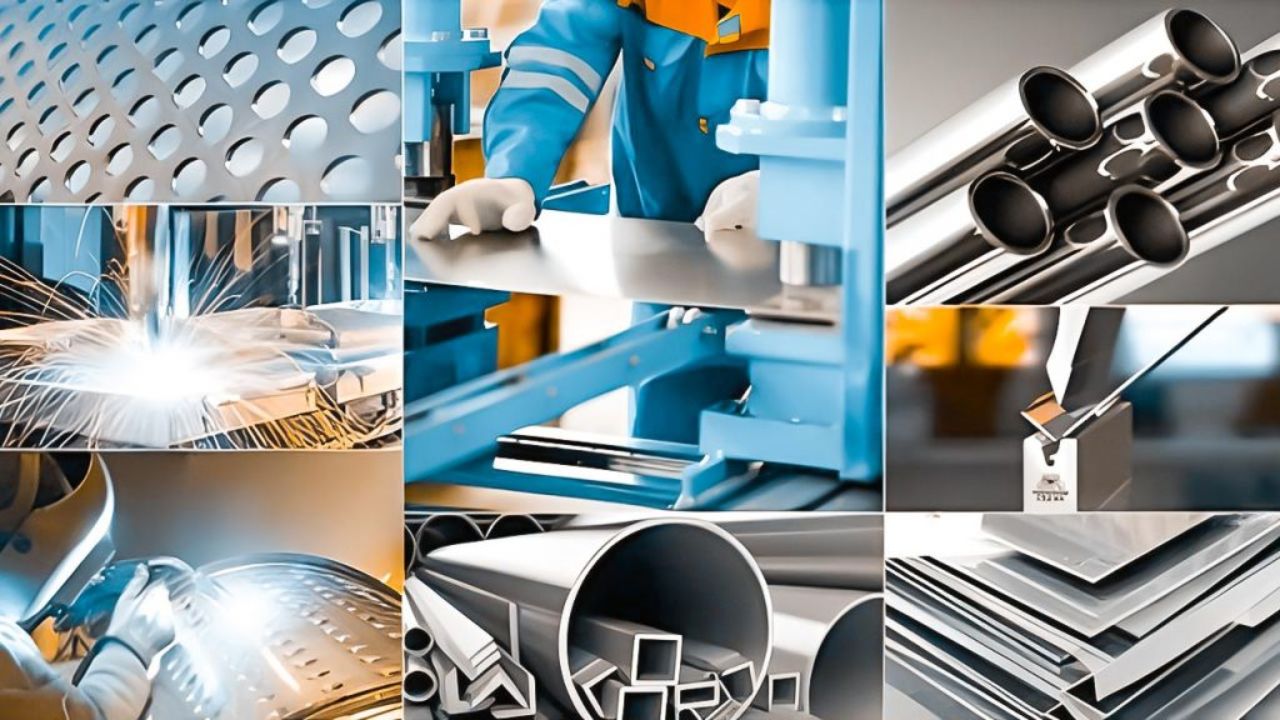
The sheet metal fabrication industry entails various specialized manufacturing processes that convert flat metal sheets into useful and highly precise metallic parts. Every process has its purpose, and it is chosen depending on the type of materials, the geometry of the part, the necessity of tolerance and its production volumes. The knowledge of the most prevalent sheet metal fabrication procedures and their application could assist the manufacturer to perform better and better, at a lower cost and maintain a good quality. ShincoFab uses these processes in a strategic manner to provide credible custom sheet metal solutions in various industries.
Laser Cutting
One of the most popular processes of sheet metal fabrication is laser cutting, as it is very fast and precise, and it is universal. It cuts metal sheets with a fine laser beam that produces minimum heat deformation and has very clean edges. This is perfect in the manufacturing of complex shapes, fine details and tight tolerances.
ShincoFab usually employs laser cutting of stainless steel, aluminum, and carbon steel components, which demand good accuracy and smoothness of the surface. It works particularly well with prototypes, low-to-medium volume manufacturing and designs that need complex patterns or small features that are critical to accuracy.
Waterjet Cutting
The waterjet cutting process involves a high-pressure jet of water, in most cases with added abrasive particles, that is used to cut metal without heat generation. Since it is a cold cutting operation, it will avoid any thermal distortion and maintenance of the mechanical properties of the material.
It is most appropriate in the case of heavy material, heat-sensitive metals or where the strength of the original material is a critical factor. ShincoFab uses waterjet cutting in the processing of aluminum, titanium and copper, which may be influenced by heat in the case of traditional cutting methods.
CNC Punching and Stamping
CNC punching and stamp is very effective in the production of repetitive components like holes, slots and cutouts. These processes involve the punching of shapes on the metal sheet using specialized tooling, which is good when it comes to large volume production.
When there is a need to produce many projects of high consistency and at high turnover, ShincoFab employs CNC punching and stamping. Electrical enclosures and panels, brackets, and structural parts are the most common uses of these processes, where uniformity and cost-effectiveness are important.
Bending and Forming
Flat metal sheets are bent and shaped into three-dimensional components through bending and forming processes, which use controlled force along particular bend lines to create the parts. This step is critical because it is used to develop angles, flanges, channels and complex shapes that enable components to fit and work properly in assemblies.
ShincoFab has accurate bend angles with tight tolerances, even with complex multi-step forming applications, due to the use of high-quality CNC bending equipment. Bending and forming are designed to be applied when the parts need structural integrity, geometry and repeatability in dimensions across manufacturing cycles.
Welding and Assembly
Welding- Welding is the process that is used to permanently fuse separate sheet metal parts into one. It gives strength, durability and long-term dependability to components that are subjected to mechanical stress or exposure to the environment.
ShincoFab has provided TIG, MIG, and robotic welding based on the requirements of the material and application. TIG welding is mostly used on thin metals and high-quality components, whereas MIG welding is used on thicker metals and in construction. Robotic welding can be used in large volume production where high standards are needed in terms of consistency and efficiency.
Surface Finishing Processes
Surface finishing is a very important process that gives an increase in both the functional and aesthetic nature of sheet metal components. Finishing processes prevent corrosion, wear and environmental damage as well as enhancing appearance on metal surfaces.
ShincoFab offers extensive variety of finish products, such as powder, painting, anodizing, electroplating, polishing, brushing and sandblasting. The processes are chosen depending on the intended purpose of the part, industry requirements, and also depending on the aesthetic considerations. Finishing of surfaces is especially necessary on items subject to extreme conditions or those that are in direct view of the final customer.
Conclusion
The process of sheet metal fabrication depends on a number of special processes that fulfill a certain manufacturing requirement. From cutting and forming to welding and surface finishing, the knowledge of the time to apply which process is important to attain high quality and reliability of the results. ShincoFab provides precision in sheet metal parts with comprehensive capabilities and advanced engineering support to deliver the best parts to industries in terms of optimized performance, durability, and efficiency.