How FRP Composite Materials Are Changing the Way Industrial Structures Are Built
Industrial construction has used the same core materials for most of the twentieth century: structural steel for framing and support structures, reinforced concrete for foundations and floors, and various coatings and treatments to manage the corrosion that both materials experience in aggressive environments. The combination worked — and still works — in many applications. But the maintenance cost of corrosion management has always been a significant fraction of industrial facility operating budgets, and the materials that don’t have that problem have been gaining ground steadily.
Fiber-reinforced polymer composites, particularly pultruded structural profiles and molded grating panels, have moved from niche applications to standard specification in several industrial sectors over the past two decades. Understanding what’s driving that shift — not the marketing version, but the version that shows up in facility maintenance records and project economics — explains why the trend is likely to continue.
The corrosion cost that drives material decisions
The case for switching to FRP composite materials in industrial construction is primarily economic, and the economics start with corrosion maintenance. A steel structure in a corrosive environment — chemical plant, water treatment facility, coastal installation, food processing facility — requires regular inspection, coating maintenance, and periodic section replacement. That maintenance program is a predictable, ongoing cost that facility operators budget for because they have no alternative with steel.
FRP structures don’t corrode in the electrochemical sense. The glass fiber reinforcement is chemically inert, and the resin matrix, when selected for the specific chemical environment, maintains its properties without the ongoing degradation that drives steel maintenance. The result is a maintenance program that’s fundamentally different: periodic inspection for mechanical damage and connection integrity, rather than the active corrosion management that steel requires.
The economic calculation for a facility considering FRP is straightforward in concept but requires honest accounting. FRP typically costs more per unit of load capacity than structural steel. The initial project budget for FRP structural components is higher. But over 20–30 years, the avoided maintenance and replacement costs often exceed the initial premium — and in some environments by a substantial margin.
Facility managers who have made the switch to FRP in specific areas of their plants and lived with the results over a decade tend to be the strongest advocates for the material, because they’ve seen the actual maintenance cost comparison in their own accounting records.
Where FRP has moved from specialty to standard
A generation ago, FRP structural components were a specialty choice requiring significant engineering justification and procurement from a short list of suppliers. Today, several industrial sectors treat FRP as the standard specification for specific applications.
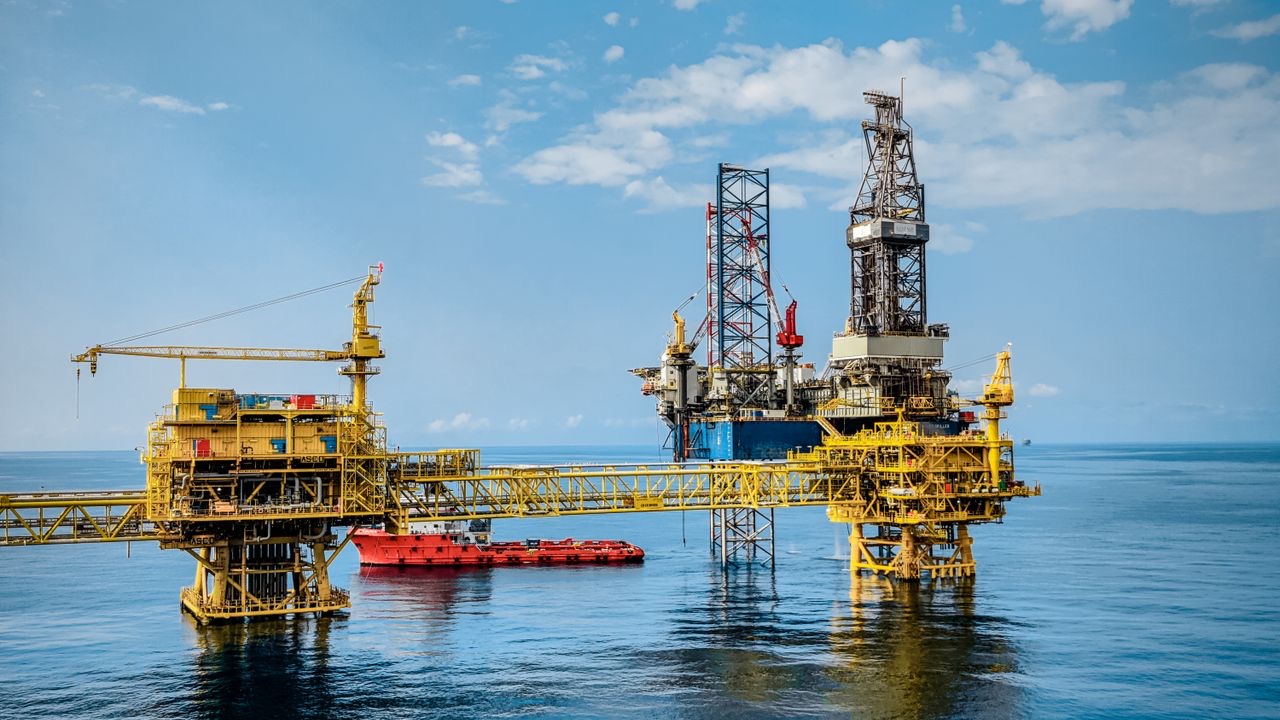
Offshore oil and gas platforms have used FRP gratings, handrails, and structural framing in topside areas for decades. The combination of marine atmosphere, difficult maintenance access, and safety requirements for non-sparking materials drove early adoption, and the performance track record has made FRP effectively standard in many offshore structural applications.
Chemical processing plants have adopted FRP extensively for walkways, platforms, pipe supports, and equipment framing in areas where process chemicals make steel maintenance untenable. The variety of available resin systems — isophthalic polyester, vinyl ester, phenolic — means FRP can be specified for a wide range of chemical environments.
Water treatment and wastewater facilities have made the switch from steel handrails and walkway framing to FRP in most new construction, and are progressively replacing steel during maintenance intervals at existing facilities. The hydrogen sulfide and chlorinated atmosphere in these facilities is aggressive enough that the steel maintenance cycle is short and the FRP payback period is correspondingly short.
The engineering shift: designing with composite properties
Designing with FRP is different from designing with steel, and the adjustment in engineering practice has been one of the factors that slowed adoption historically. Steel design uses isotropic material properties — the same strength and stiffness in all directions — which simplifies calculation. FRP pultruded profiles are anisotropic: much stronger and stiffer in the fiber direction than across it. Design guides for FRP structures (the Eurocomp Design Code, the ASCE Structural Plastics Design Manual, the various national standards) address this explicitly, but they’re less familiar to most structural engineers than the steel and concrete codes they use routinely.
The availability of FRP design training and reference materials has improved significantly over the past decade, and the generation of engineers now entering practice has more exposure to composite materials than their predecessors. Design software tools have incorporated FRP material models. The practical barriers to engineering with FRP are lower than they were.
The supply chain: from specialty to accessible
A practical consideration in specifying any material is whether there’s a reliable supply chain that can deliver product on standard industrial timelines. For FRP structural profiles and gratings, the supply chain has matured considerably. Standard pultruded profile shapes in common resin systems are stocked by multiple distributors in most industrial markets. Custom profiles have lead times measured in weeks rather than months for most standard configurations.
Sourcing from an established FRP manufacturer — one with documented quality systems, third-party test data, and a track record in the relevant industrial sectors — provides confidence that the product will perform as specified. The range of suppliers now includes both large multinational composite manufacturers and specialized regional producers. Checking leihongfiberglass.com and comparable established manufacturers for product range, available resin systems, and documentation of test data gives a starting point for evaluating supplier options for a specific project.
Maintenance in practice: what the track record shows
The facilities that have used FRP structural components for ten or more years in demanding environments provide the most useful data on actual long-term performance. The consistent finding is that FRP structures in appropriate applications require significantly less maintenance than equivalent steel structures in the same environment.
“Appropriate applications” is doing meaningful work in that sentence. FRP in applications outside its material limits — loads exceeding design capacity, chemical environments beyond the resin system’s resistance, temperatures approaching the glass transition temperature of the resin — fails, and it fails differently from steel (sudden fracture rather than gradual yielding in some failure modes). But in applications where it’s correctly specified, the low maintenance claim is well-supported by actual facility operating experience.
The expansion of FRP use in industrial construction follows directly from that track record becoming more visible to facility engineers and procurement teams. The more plants that have FRP in service and can point to the maintenance cost comparison in their own records, the more projects specify FRP as the standard choice rather than the alternative that needs justification.